
Preparing the Future Communities to Face Climate-Related Security Risk
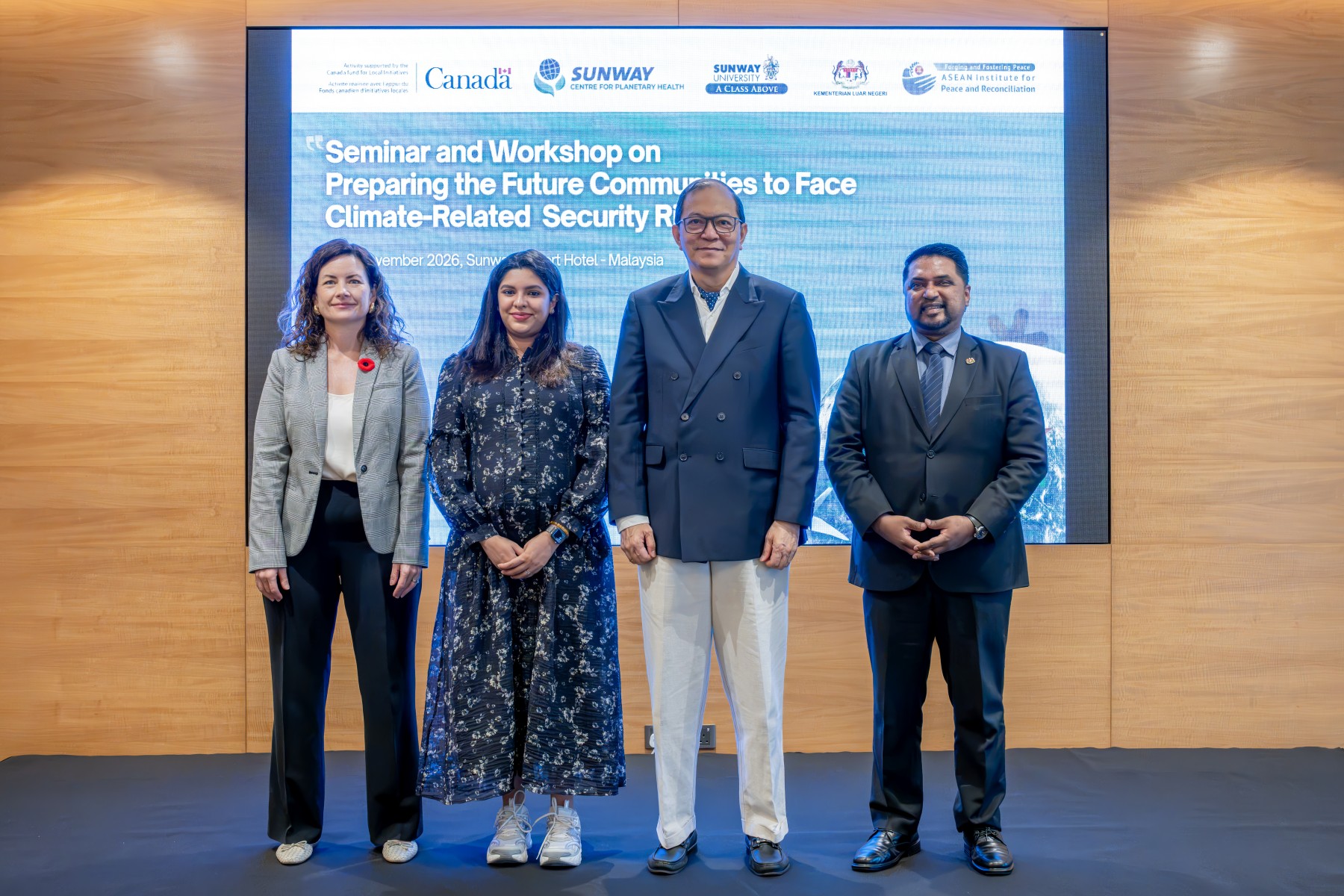
KUALA LUMPUR, 17 November 2026 —The ASEAN Institute for Peace and Reconciliation (ASEAN-IPR), in collaboration with the Sunway Centre for Planetary Health, convened the “Seminar and Workshop on Preparing the Future Communities to Face Climate-Related Security Risk” on 11–12 November 2026 at the Sunway Resort Hotel, Petaling Jaya, Malaysia.
Supported by the Government of Malaysia through the Ministry of Foreign Affairs and the Government of Canada through the Canada Fund for Local Initiatives (CFLI), the two-day programme was organised against the backdrop of increasingly interconnected climate-related risks across Southeast Asia, including their implications for peace and security. Climate change, environmental degradation and biodiversity loss are among the major megatrends identified under ASEAN 2045: Our Shared Future, with implications for livelihoods, food and water security, health, human mobility, infrastructure and disaster resilience. These pressures may also exacerbate existing social, economic and institutional vulnerabilities, placing additional pressure on communities across ASEAN. The programme was therefore designed to respond to these regional realities by examining how climate-related pressures may interact with existing vulnerabilities and create cascading risks for communities.
In the opening session, Mr. R. M. Michael Tene, Executive Director of ASEAN-IPR, underscored the importance of looking beyond climate change solely as an environmental concern. “Climate change increasingly interacts with existing social, economic and political vulnerabilities. Understanding these connections is therefore important not only for strengthening climate resilience, but also for anticipating how emerging and interconnected risks may affect peace, stability and communities across the region. Through this programme, we hope to identify where existing policies and mechanisms can be strengthened and where greater cross-sectoral and regional cooperation may be needed.”
Prof. Dr. Jemilah Mahmood, Executive Director of the Sunway Centre for Planetary Health, highlighted the importance of institutional collaboration in addressing the interconnected challenges of climate, peace and security. “Addressing climate-related security risks requires a collective approach that brings together diverse expertise, institutions and perspectives. Through our collaboration with ASEAN-IPR, we are creating an important platform for regional stakeholders to strengthen cooperation, bridge knowledge and policy, and advance more integrated responses towards building resilient communities across Southeast Asia.”
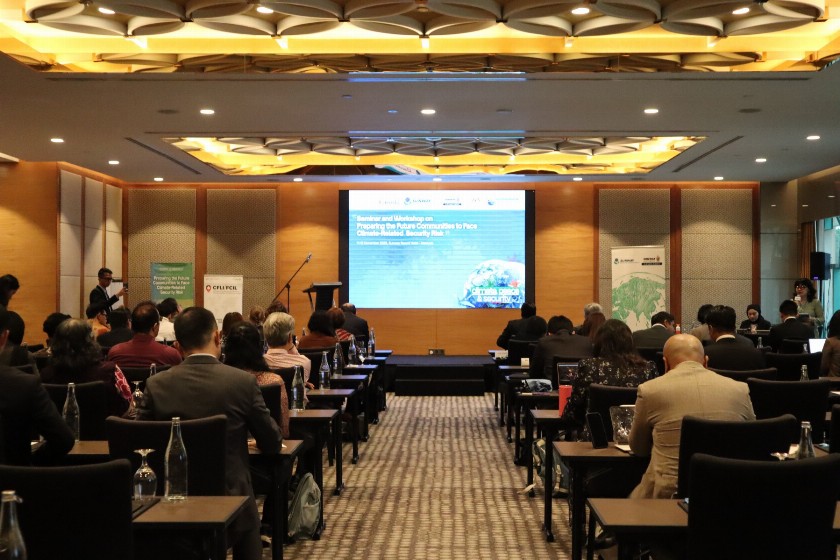
Malaysia’s Ministry of Foreign Affairs, as one of the main supporters of the joint initiative, also highlighted the urgency of strengthening regional cooperation on climate, peace and security. “Cooperation on the climate, peace, and security nexus is an urgent strategic necessity for ASEAN because climate change has evolved well beyond an environmental concern into a potent ‘threat multiplier’ that amplifies political instability, strains resources, and deepens societal vulnerabilities across Southeast Asia. By deliberately connecting the mandates of disaster management mechanisms like the AHA Centre, with environmental bodies and peace research institutions, this initiative establishes the cross-sectoral coordination required to manage interconnected megatrends that threaten community livelihoods and public health across our borders.”
The Ministry representative further noted that its support for the programme also reflects Malaysia’s enduring commitment to strengthening ASEAN’s institutional capacity to navigate complex, non-traditional security challenges. It also expressed its hope that the initiative would reinforce an enduring multi-stakeholder ecosystem that upholds ASEAN Centrality by strengthening connections among regional institutions, academic centres of excellence, youth- and women-led civil society organisations, as well as international partners.
Existing ASEAN frameworks increasingly address climate impacts across disaster management, public health, food and water security, human mobility, gender equality, youth participation and community resilience. Against this backdrop, the Seminar and Workshop served as a multi-track platform that brought together policymakers, ASEAN bodies/entities, researchers, practitioners, and civil society and community actors to explore how these areas can be connected more effectively under the Climate, Peace and Security (CPS) agenda.
Mission of Canada to ASEAN, represented by the High Commission in Malaysia, highlighted the shared commitment between ASEAN and Canada to building resilient communities, supporting women and youth, and advancing sustainable and inclusive development. “Across Southeast Asia, communities are increasingly experiencing the effects of climate change firsthand, whether through flooding, droughts, extreme weather events, or other weather-related disruptions to livelihoods. These impacts are often felt first and most acutely at the local level, but their implications can reverberate much further, affecting the resilience, social cohesion, and long-term development of entire countries. This Seminar and Workshop provide an important opportunity to bring together policymakers, researchers, practitioners, and community voices to better understand these connections and identify practical responses.”
Canada further noted that the initiative reflects shared priorities under ASEAN 2045: Our Shared Future and ASEAN-Canada Strategic Partnership Plan of Action 2026–2030. “Canada and ASEAN share a commitment to building resilient communities, supporting women and youth, and advancing sustainable and inclusive development. Often, the most lasting impact of gatherings such as this comes not only from the exchange of ideas, but from the relationships and collaborations that continue afterwards. Looking ahead, practical recommendations, stronger regional networks, and greater collaboration between ASEAN stakeholders and Canadian partners are some of the outcomes we’d like to see from this initiative. By bringing together diverse perspectives and expertise, the programme can help advance regional efforts CPS while further deepening the ASEAN-Canada Strategic Partnership in support of a more resilient and sustainable future.”
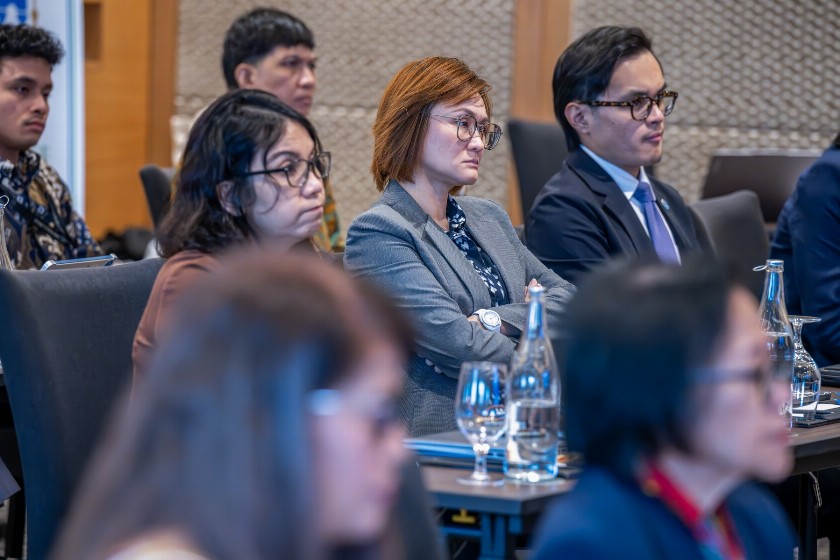
The Seminar on 11 November, attended by more than 80 participants, examined the climate-security nexus from several interconnected perspectives. Discussions covered climate vulnerability and resilience; the implications of climate risks for peace and security; misinformation and information integrity in the digital environment; future pandemics and public-health preparedness; youth leadership; and the differentiated impacts disasters on women and communities.
The programme also placed particular emphasis on the connection of CPS with Women, Peace and Security (WPS) and Youth, Peace and Security (YPS). Discussions highlighted how climate-related disasters may disrupt access to education, livelihoods, Water, Sanitation and Hygiene (WASH) system, Sexual and Reproductive Health and Rights (SRHR) services, while also increasing protection risks. At the same time, women, youth and local communities were recognised as important actors in preparedness, resilience-building, recovery and peacebuilding.
On 12 November, the programme continued with a closed-door Workshop that brought together policymakers and relevant ASEAN stakeholders for a more focused discussion on practical policy responses to climate-related security risks. The discussions explored areas where ASEAN could strengthen cooperation and considered how policy responses can better reflect day-to-day realities, differentiated vulnerabilities and best practices of communities while contributing to regional resilience.